Español


Yoga vs Stretching: Key Differences, Benefits & What to Choose
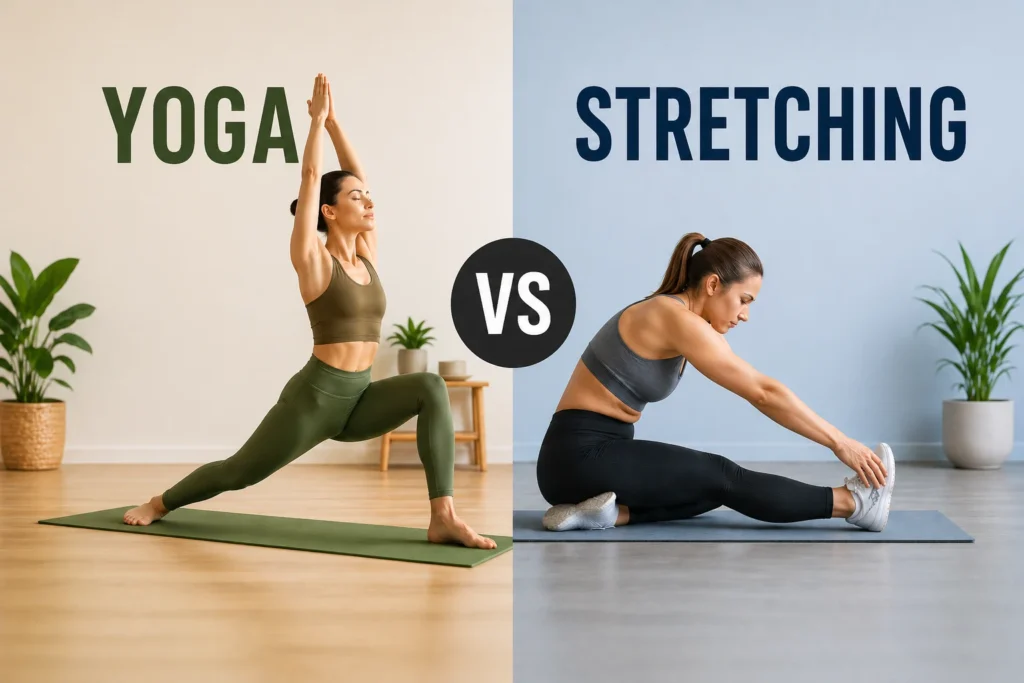
Table of Contents
- Introduction : Yoga vs Stretching
- What Stretching Actually Feels Like (Not Just What It Is)
- What Yoga Feels Like Over Time
- Yoga vs Stretching: The Core Difference
- Stretching vs Yoga: A Real-Life Breakdown
- Static Stretching vs Yoga: Why They Look Similar but Aren’t
- Stretching Mat vs Yoga Mat: Small Detail, Big Difference
- Yoga vs Stretching for Flexibility
- Stretching vs Yoga Christianity: A Thoughtful Perspective
- When Stretching Makes More Sense
- When Yoga Becomes the Better Option
- Precautions and Contraindications
- Common Mistakes Most People Don’t Notice
- Rishikesh Yog Kendra – Yoga School in Rishikesh
- Final Thoughts
- FAQs: Yoga vs Stretching
Introduction : Yoga vs Stretching
If you’ve ever stood at the end of a workout, holding a hamstring stretch and wondering, “Is this basically yoga?”—you’re not alone. I used to think the same. In fact, for a long time, I believed yoga was just slow stretching with a fancier name.
However, after practicing both consistently, that idea didn’t hold up.
While they may look similar from the outside, yoga vs stretching is not a small comparison—it’s a completely different experience once you step into it. And interestingly, the difference isn’t just physical. It shows up in how your body feels later, how your mind responds, and even how consistent you stay.
So if you’re trying to figure out stretching vs yoga, or even diving deeper into static stretching vs yoga, this guide breaks it down in a way that feels real—not textbook.
What Stretching Actually Feels Like (Not Just What It Is)
Stretching is simple in theory. You lengthen a muscle, hold the position, and release tension.
But in practice, it often feels like a negotiation with your body.
You go a little deeper. You hold a little longer. Sometimes you push slightly past comfort because you want results.
Most people stretch for practical reasons:
- Tight muscles after sitting for a long sitting.
- Post-workout soreness
- Improving flexibility in specific areas
And honestly, stretching works. It’s quick. It’s effective. It does what it promises.
However, it stays local. It fixes a spot, not the whole system.
What Yoga Feels Like Over Time
Yoga didn’t make sense to me in the beginning. It felt slow. Almost too slow.
But after a few sessions, something shifted.
Instead of forcing movement, you start noticing it. Instead of chasing flexibility, you start understanding your limits.
Yoga includes:
- Movement (asanas)
- Breathing (pranayama)
- Awareness (mental focus)
At first, that sounds like extra steps. Later, it feels like the missing piece.
Yoga vs Stretching: The Core Difference
Here’s the simplest way to understand it:
- Stretching works on muscles
- Yoga works on the experience of your body.
Stretching asks: How far can you go?
Yoga asks: What’s happening while you’re there?
That difference may seem subtle, yet it completely changes the outcome.
Stretching vs Yoga: A Real-Life Breakdown
Purpose Feels Different
Stretching is often reactive. You do it because something feels tight.
Yoga is proactive. You do it to prevent that tightness from building up in the first place.
Effort Shows Up Differently
With stretching, effort feels physical.
With yoga, effort feels balanced. There’s movement, but also stillness. There’s effort, but also release.
Results Build Differently
Stretching gives faster, noticeable results in specific muscles.
Yoga builds slower, but it lasts longer and feels more natural.
Static Stretching vs Yoga: Why They Look Similar but Aren’t
This is where confusion happens.
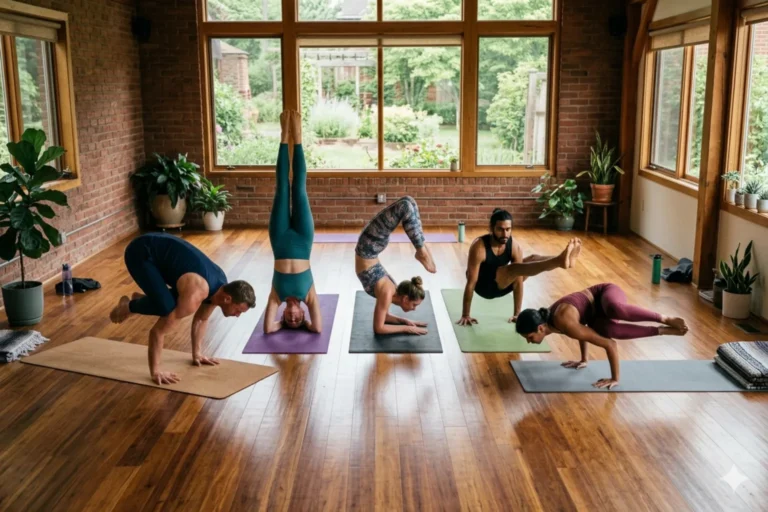
Static stretching involves holding a position for a set time. Yoga also includes poses where you stay still.
So naturally, they look identical.
However, the internal experience is completely different.
In static stretching:
- You hold
- You wait
- You release
In yoga:
- You hold
- You breathe
- You observe
- You adjust
That extra awareness changes how your body responds. Over time, it reduces strain and improves control.
Stretching Mat vs Yoga Mat: Small Detail, Big Difference
This might seem minor, but it matters more than people expect.
Stretching Mat
- Softer and thicker
- Designed for comfort
- Less grip
Yoga Mat
- Balanced cushioning
- Strong grip for stability
- Designed for movement and balance
If you’ve ever slipped during a pose, you’ll understand why a yoga mat makes a difference.
Yoga vs Stretching for Flexibility
Both improve flexibility, but they take different paths.
Stretching isolates.
Yoga integrates.
For example, stretching your hamstrings helps you touch your toes. But yoga connects your hamstrings with your back, hips, and posture.
As a result, flexibility from yoga feels more usable in daily life.
Stretching vs Yoga Christianity: A Thoughtful Perspective
This topic often comes up, and it deserves a clear answer.
Stretching is purely physical. It doesn’t involve belief systems.
Yoga, however, has roots in ancient traditions. Because of that, some people question whether it aligns with their faith, especially in Christianity.
Here’s what I’ve seen in real practice:
- Some people use yoga only for movement and breathing.
- Some avoid spiritual elements entirely.
- Some embrace the full traditional path.
So the concern isn’t about yoga itself—it’s about how it’s practiced.
If your intention is fitness and relaxation, many people find a version of yoga that fits comfortably within their beliefs.
When Stretching Makes More Sense
There are moments where stretching is simply the better choice.
- After intense workouts
- When you feel tight in one specific area
- When you have limited time
- When you want something straightforward
Stretching fits easily into busy routines.
When Yoga Becomes the Better Option
- Yoga starts to make more sense when:
- Stress becomes part of your daily life.
- You want long-term flexibility.
- You need both strength and mobility.
- You’re looking for consistency, not quick fixes.
It’s less about quick results and more about sustainable change.
Can You Combine Yoga vs Stretching?
Yes—and that’s usually the most realistic approach.
You don’t have to choose one.
You can stretch after workouts and practice yoga on rest days. Over time, both support each other.
Precautions and Contraindications
This is where people often rush—and that’s where problems start.
1. Avoid Forcing Flexibility
Being too forceful can result in:
- Muscle strain
- Damage to ligaments
- Instability of joints
The process should be slow, rather than rushed.
2. Injuries Must Be Taken Into Account
If you have
- Back pain
- Knee pain
- Shoulder pain
Stretching exercises or advanced asanas might not suit your body.
3. Breathing Must Be Kept Natural
Yoga requires attention to breathing.
Breathing exercises that include breath retention not only worsen stress levels but might also result in dizziness.
4. Certain Precautions Required under Specific Medical Conditions
People having:
- High blood pressure
- Vertigo
- Heart disorders
Should not engage in strenuous asanas, especially those involving inversion.
5. Pregnancy
All postures cannot be performed during pregnancy.
Modified routines are important, especially in later stages.
Common Mistakes Most People Don’t Notice
Looking back, these stood out the most:
- Treating yoga like a flexibility test
- Ignoring breathing completely
- Rushing progress
- Skipping warm-ups before stretching
- Comparing with others
These mistakes slow down progress more than anything else.
Rishikesh Yog Kendra – Yoga School in Rishikesh
Start your transformation at the Rishikesh Yog Kendra, which is one of the best yoga School located in Rishikesh. To emphasize their efforts to keep yoga pure, the yoga School provides Yoga Alliance-certified courses for yoga training, including 100-hour, 200-hour, and 300-hour courses, as well as a Pre & Post Natal Yoga Teacher Training Course in Rishikesh. The yoga school focuses on developing harmony with a combination of yoga practice, yoga asana, pranayama, meditation, philosophy of yoga, yogic anatomy, and yoga teaching techniques. Participants will have access to comfortable accommodation, good food, and organized trips to the holy sites in Rishikesh.
Final Thoughts
If you’re still deciding between yoga vs stretching, the simplest way to understand it is this:Stretching fixes what feels tight.
Yoga changes how your body feels overall.
Both have their place. Both are useful. However, they work in very different ways.
From experience, stretching gives quick relief.The feeling comes instantly, particularly after a hard day or an intense training session. Yoga, however, is much more subtle. The effects build over time, and you start noticing changes in how you move, sit, and even respond to stress.
So instead of choosing one over the other, it often makes more sense to understand what your body needs at a given moment.
Because sometimes you need a quick release—and sometimes you need something deeper that lasts.
FAQs: Yoga vs Stretching
1. Is yoga better than stretching?
It depends on your goal. Yoga provides greater advantages compared to stretching.
2. Does stretching substitute yoga?
No. It does not have both the psychological aspect and breathing exercises involved in yoga.
3. Is yoga alone sufficient without stretching?
Yes. This is because yoga includes stretching in itself.
4. Which is better for beginners?
Stretching is simpler to start. Yoga takes a bit more awareness but offers more in return.
5. How frequently should I do this exercise?
This exercise is recommended three to five days a week.
6. Does yoga develop flexibility quicker?
Not necessarily, but yoga helps in developing better and sustainable flexibility.
7. Do I need a yoga mat?
Yes, if you do yoga frequently, because it helps you maintain balance.
8. Can someone who is religious practice yoga?
Yes, based on how they practice yoga, which some individuals modify based on their religions.