Español


What Is a Mantra? Meaning, Types, Benefits, and How It Works
Table of Contents
- What Is a Mantra?
- What Is the Purpose of a Mantra?
- Different Types of Mantras
- 1. Bija Mantras
- 2. Om Mantra
- 3. Personal or Meditation Mantras
- 4. Devotional Mantras
- 5. Longer Sanskrit Mantras
- How Does Mantra Meditation Work?
- What Happens When You Chant a Mantra?
- Benefits of Mantra Practice
- 1. Supports Mental Focus
- 2. Encourages Relaxation
- 3. May Improve Meditation Practice
- 4. Develops Awareness
- 5. Connects Sound and Breath
- 6. Supports a Regular Yoga Practice
- How to Practice Mantra Meditation
- Step 1: Find a Comfortable Position
- Step 2: Close Your Eyes
- Step 3: Choose a Mantra
- Step 4: Begin Repeating
- Step 5: Observe the Sound
- Step 6: Bring the Mind Back
- Step 7: Sit Quietly
- Mantra Chanting in Yoga
- Mantra vs. Affirmation: Are They the Same?
- Do You Need to Understand the Meaning of a Mantra?
- How Long Should You Chant a Mantra?
- Is Mantra Chanting Suitable for Beginners?
- Mantra and the Yogic Lifestyle
- Frequently Asked Questions About Mantras
- What is a mantra in simple words?
- What is the most common mantra?
- Can I practice mantra meditation at home?
- Can mantra chanting be done silently?
- How many times should a mantra be repeated?
- Is mantra chanting part of Yoga Teacher Training?
- Final Thoughts
Have you ever noticed how repeating a particular word, sound, or phrase can make the mind feel quieter? This simple practice is at the heart of mantra meditation, an ancient yogic tradition that has been practiced for centuries.
A mantra is more than just a word that is repeated during meditation. In the yogic tradition, sound is considered a powerful tool for focusing the mind, creating awareness, and developing a deeper connection with oneself.
Today, mantra practice is found in yoga classes, meditation sessions, spiritual traditions, and Yoga Teacher Training courses around the world.
But what exactly is a mantra? What does it mean, how does it work, and what are its benefits?
Let’s explore.
What Is a Mantra?
The word mantra comes from two Sanskrit roots: manas, meaning “mind,” and tra, which is commonly understood as “tool” or “instrument.”
So, a mantra can be understood as a tool for the mind.
A mantra may be a single sound, a word, or a longer phrase that is repeated silently or aloud. The repetition gives the mind something specific to focus on instead of allowing it to constantly move from one thought to another.
Some mantras are associated with particular spiritual traditions, while others are used mainly as meditation or concentration practices.
For example, Om (Aum) is one of the most well-known sacred sounds in yoga. It is commonly chanted at the beginning or end of a yoga or meditation practice.
What Is the Purpose of a Mantra?
The purpose of a mantra can vary depending on the tradition and the intention behind the practice.
In yoga, mantra practice may be used to:
- Develop concentration
- Calm a restless mind
- Support meditation
- Encourage mindfulness
- Create a sense of inner steadiness
- Deepen one’s yoga and spiritual practice
- Develop awareness of breath and sound
Rather than trying to stop thoughts completely, mantra meditation gives the mind a steady point of attention.
With regular practice, this can make it easier to notice when the mind wanders and gently bring attention back to the mantra.
Different Types of Mantras
There are many types of mantras, and they can be categorized in different ways. Some are very short, while others are longer verses.
1. Bija Mantras
Bija means “seed” in Sanskrit. Bija mantras are usually short sounds or syllables that are traditionally associated with particular energies or aspects of consciousness.
Examples include:
- Om
- Lam
- Vam
- Ram
- Yam
- Ham
These sounds are often used in traditional yoga and meditation practices.
2. Om Mantra
Om, also written as Aum, is perhaps the most widely recognized mantra in yoga.
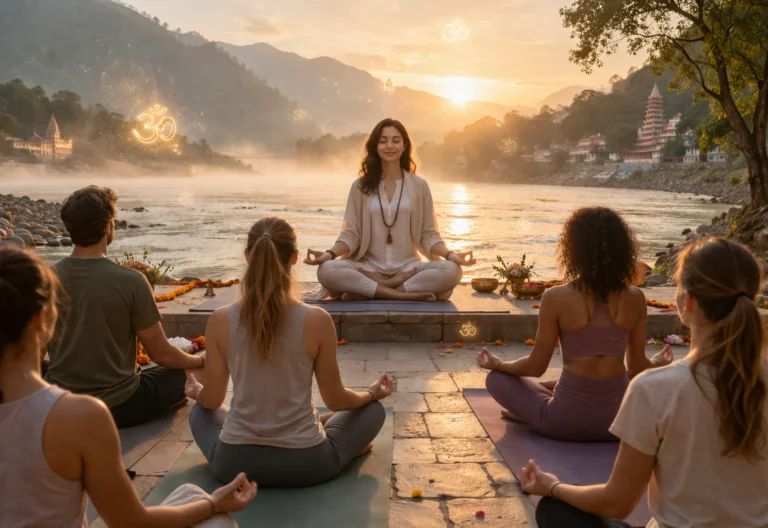
It is commonly chanted slowly and with awareness of the sound and vibration. Practitioners may use Om before meditation, during a yoga class, or as part of a longer spiritual practice.
The practice is less about simply saying the sound and more about observing the experience of chanting, breathing, and listening.
3. Personal or Meditation Mantras
Some practitioners use a short word or phrase as a meditation object. The mantra may be repeated silently with each breath or at a comfortable rhythm.
The important aspect is consistency and attention rather than simply repeating the words mechanically.
4. Devotional Mantras
Many traditional mantras are connected with devotional practices and specific deities or spiritual traditions.
Examples include:
Om Namah Shivaya
and
Hare Krishna
These mantras are often practiced as part of Bhakti Yoga, where repetition of sacred names or phrases becomes an expression of devotion.
5. Longer Sanskrit Mantras
Some mantras are complete Sanskrit verses. The Gayatri Mantra, for example, is a well-known Vedic mantra traditionally recited as a prayer for illumination and wisdom.
Longer mantras can be practiced through chanting, repetition, or meditation.
How Does Mantra Meditation Work?
One of the simplest ways to understand mantra meditation is to think of the mantra as an anchor for attention.
During normal daily life, the mind constantly jumps between thoughts, memories, plans, emotions, and external distractions.
When you repeat a mantra, you give your attention one consistent object.
For example:
Om… Om… Om…
As you repeat the sound, you may become aware of your breathing, the sound itself, physical sensations, and the movement of your thoughts.
When the mind wanders, you simply return your attention to the mantra.
This process of noticing distraction and returning to the chosen point of focus is an important part of meditation.
What Happens When You Chant a Mantra?
Mantra practice involves more than the meaning of the words.
When a mantra is chanted aloud, you are also working with:
- Sound
- Breath
- Rhythm
- Repetition
- Attention
- Listening
The physical experience of producing a sound can make the practice more engaging than simply sitting and trying to “think about nothing.”
Over time, practitioners may move from audible chanting to softer repetition and eventually to mental repetition.
This can create a gradual transition from external sound toward internal awareness.
Benefits of Mantra Practice
Mantra practice has been traditionally used as a method for developing concentration and supporting meditation. Modern practitioners also commonly use it as part of a relaxation and mindfulness routine.
1. Supports Mental Focus
Repeating one sound or phrase gives the mind a specific object to concentrate on.
This can be particularly helpful for beginners who find silent meditation difficult.
2. Encourages Relaxation
Slow, rhythmic chanting can become a calming practice, especially when combined with comfortable breathing and a relaxed posture.
For many people, the repetitive nature of mantra practice helps create a sense of stillness.
3. May Improve Meditation Practice
A mantra can make meditation more accessible by giving practitioners something concrete to focus on.
Instead of becoming frustrated when thoughts appear, you can simply notice the distraction and return to the mantra.
4. Develops Awareness
Mantra meditation encourages you to observe your own experience.
You may become more aware of your thoughts, breathing patterns, emotions, and reactions without immediately becoming involved in them.
5. Connects Sound and Breath
Many mantra practices naturally follow the rhythm of breathing.
This can help bring attention away from external distractions and toward the present moment.
6. Supports a Regular Yoga Practice
Mantra chanting can complement Hatha Yoga, meditation, Pranayama, and other traditional yoga practices.
For this reason, mantra chanting is often included in a traditional 200 Hour Yoga Teacher Training course.
How to Practice Mantra Meditation
You don’t need a complicated setup to begin.
Here is a simple method for beginners.
Step 1: Find a Comfortable Position
Sit comfortably on a yoga mat, cushion, or chair. Keep the spine naturally upright without creating unnecessary tension.
Step 2: Close Your Eyes
Close your eyes gently and take a few slow breaths.
Allow your body to settle before beginning the mantra.
Step 3: Choose a Mantra
Beginners can start with a simple mantra such as Om.
If you already follow a particular yoga or spiritual tradition, you may practice a mantra traditionally associated with that tradition.
Step 4: Begin Repeating
Repeat the mantra slowly and comfortably.
You can chant it aloud at first or repeat it mentally.
Try not to rush.
Step 5: Observe the Sound
Pay attention to the sound, rhythm, vibration, and your breathing.
If you are chanting aloud, listen to your own voice as carefully as you produce the sound.
Step 6: Bring the Mind Back
Your mind will wander. This is completely normal.
Whenever you notice that you have become distracted, gently return your attention to the mantra.
There is no need to criticize yourself.
Step 7: Sit Quietly
After several minutes, stop repeating the mantra and sit quietly for a short while.
Notice how you feel before returning to your normal activities.

Mantra Chanting in Yoga
Mantra chanting has a significant place in traditional yoga practice.
Yoga is not limited to physical postures. Traditional yoga includes practices related to breath, concentration, meditation, self-discipline, philosophy, and awareness.
Mantra can therefore be practiced alongside:
- Asana
- Pranayama
- Meditation
- Trataka
- Yoga Nidra
- Bhakti Yoga
- Yoga philosophy
In a traditional Yoga Teacher Training course, students may learn not only how to perform physical yoga practices but also how sound, breath, concentration, and meditation fit into the wider yogic tradition.
Mantra vs. Affirmation: Are They the Same?
Mantras and affirmations can sometimes look similar, but they are not necessarily the same.
An affirmation is generally a positive statement used to reinforce a particular thought, belief, or intention.
For example:
“I am calm and present.”
A mantra, particularly within traditional yogic and spiritual practices, may be a Sanskrit sound, sacred word, or traditional verse that has been passed down within a particular practice or lineage.
The two can both involve repetition, but their origins, purposes, and contexts can be different.
Do You Need to Understand the Meaning of a Mantra?
Understanding the meaning can certainly deepen your connection with a mantra, especially when practicing a traditional Sanskrit mantra.
However, mantra practice is not only about intellectually understanding the words.
Sound, rhythm, repetition, breath, attention, and the overall experience of chanting can all be part of the practice.
If you are learning a Sanskrit mantra, it is useful to learn its correct pronunciation and understand its traditional meaning rather than treating it simply as a collection of sounds.
How Long Should You Chant a Mantra?
There is no single duration that works for everyone.
If you are a beginner, you can start with 5 to 10 minutes and gradually increase the duration as the practice becomes comfortable.
Some traditional practices use a specific number of repetitions, while others may be practiced for a set period of time.
Consistency is generally more useful than forcing yourself to practice for a long time once in a while.
Is Mantra Chanting Suitable for Beginners?
Yes. Mantra meditation can be a simple starting point for people who are new to meditation.
In fact, having a specific sound or phrase to focus on can sometimes make meditation easier than sitting silently with no particular object of attention.
Beginners should start gently and focus on comfortable breathing, correct pronunciation when using Sanskrit mantras, and steady attention.
If a mantra comes from a specific spiritual tradition or lineage, learning it from a knowledgeable teacher can also be helpful.
Mantra and the Yogic Lifestyle
In traditional yoga, practices are often seen as interconnected rather than isolated techniques.
A student may practice asana in the morning, pranayama afterward, mantra chanting during a spiritual or meditation session, and self-study later in the day.
This broader approach is one reason mantra chanting continues to be included in many Yoga Teacher Training programs in India.
For students interested in understanding yoga beyond physical postures, learning about mantra can provide another perspective on the traditional practices of yoga.
Frequently Asked Questions About Mantras
What is a mantra in simple words?
A mantra is a sound, word, or phrase that is repeated to support concentration, meditation, or a particular spiritual practice.
What is the most common mantra?
Om (Aum) is one of the most widely recognized and practiced mantras in yoga and meditation traditions.
Can I practice mantra meditation at home?
Yes. You can practice a simple mantra at home in a quiet and comfortable place. Start with a few minutes and gradually build a regular practice.
Can mantra chanting be done silently?
Yes. A mantra may be repeated aloud, softly, or mentally. Different traditions use different approaches.
How many times should a mantra be repeated?
There is no universal number. Some traditions prescribe specific repetitions, while a general meditation practice can simply use the mantra for a chosen period of time.
Is mantra chanting part of Yoga Teacher Training?
Many traditional Yoga Teacher Training courses include mantra chanting, particularly programs that incorporate traditional Hatha Yoga, meditation, Bhakti Yoga, and yoga philosophy.
Final Thoughts
A mantra may appear simple—a sound, word, or phrase repeated again and again—but the practice can become much deeper when approached with awareness.
Rather than treating mantra chanting as something that has to be performed perfectly, think of it as a way to bring the mind back to one point.
With regular practice, the combination of sound, breath, repetition, and attention can become a valuable part of a wider yoga and meditation routine.
Whether you are completely new to meditation or studying yoga more deeply through a 200 Hour Yoga Teacher Training course, mantra practice offers a traditional way to explore concentration, sound, and inner awareness.