
Introduction
In today’s busy and technology-based lifestyle, our bodies have become the most neglected. Sitting at one place for hours and studying, continuously working on a mobile or laptop, lack of physical activities and irregular daily routines, back pain, belly fat, weak muscles, and bad posture have now become common problems. Especially students and working professionals are getting more affected by these problems.
In this context, yoga, especially Hatha yoga, is again gaining an important place in people’s daily routines. Hatha yoga is not just an exercise method, but it is an ancient and effective path to establish balance between body and mind. Its slow and steady nature deeply activates the muscles, thereby developing core strength.
Hatha yoga not only makes the body flexible and strong but also naturally increases core strength by strengthening the muscles of the stomach, waist, back, and spine. Regular practice not only builds physical strength but also develops mental stability and self-awareness.
In this blog, we will know in detail what Hatha Yoga is, where it originated from, what its purpose is, and which Hatha Yoga asanas are especially helpful in increasing core strength. You will also understand the simple steps and benefits of each asana so that you can easily include it in your daily routine.
Origin of Hatha Yoga
The origin of Hatha Yoga is considered to be in ancient India. We find its mention in the Nath sect and the teachings of Yogi Matsyendranath and Guru Gorakhnath. Hatha Yoga developed approximately between the 11th and 15th centuries.
The main texts of Hatha Yoga are
- Hatha Yoga Pradipika
- Gheranda Samhita
- Shiva Samhita
- Asana, pranayam, mudra, bandha, and meditation are described in detail in these texts.
Why Hatha Yoga Came into Existence
“Ha” means sun (energy)
“Tha” means moon (peace)
Hatha yoga is the balance of sun and moon energies.
This mainly includes:
- Asana
- Pranayama
- Purification processes
- Attention
The pace of Hatha Yoga is slow, due to which the body is deeply worked in every asana.
What is core strength in Hatha yoga
Core strength is the internal strength of the body that provides us with stability, balance, and correct posture.The muscles in the middle part of our body support everyday activities like sitting, standing, bending, and walking. When the core is strong, it reduces stress on the body and lowers the risk of injury or pain. Therefore, it is very important to have strong core strength for a fit and healthy body.
Core strength doesn’t just mean abdominal muscles. These include:
- Abs
- Waist
- The back
- Hips
- Spinal muscles
From a strong core:
- Improves posture
- Reduces back pain
- The body remains balanced
What is taught in Hatha Yoga?
Hatha Yoga goes beyond simply twisting the body or performing asanas; it teaches a person to connect deeply with the body, breath, and mind. During Hatha Yoga practice, one performs every movement slowly and with full awareness, which helps in understanding the body’s capabilities and limitations.
Through regular Hatha Yoga practice, breathing remains under control, which makes the asanas effective and also reduces mental stress. Along with this, the muscles of the body become stronger, flexibility increases, and the mind becomes calmer and more concentrated. Hatha yoga practices patience and consistency, allowing one to learn to maintain balance not only on the yoga mat but also in daily life.
Hatha Yoga teaches us:
- Correct breathing technique
- Body awareness
- Muscle control
- Patience and stability
- Peace of mind
At Rishikesh Yog Kendra, Hatha Yoga is taught in its traditional and pure way. Here, special attention is given to core strength, physical balance, and mental peace under the guidance of experienced yoga instructors. Rishikesh Yog Kendra is considered to be an excellent option to learn Hatha yoga in depth.
The relation between Hatha Yoga and Core strength
The relation between Hatha yoga and core strength is not limited to physical exercise only, but it is linked to the internal structure and balance of the body. The asanas performed in Hatha Yoga are based on keeping the body stable in a certain position, due to which the muscles remain active for a long time. During stability, the entire weight of the body falls on the muscles around the abdomen, waist, and spine, which are the main parts of the core.
Additionally, there is a deep coordination of breath and movement in Hatha Yoga. When controlled breathing is combined with asanas, the deep abdominal muscles automatically become activated. For this reason, Hatha Yoga is considered not just a yoga practice but a complete method of developing core strength.
Most of the asanas of Hatha Yoga are such that:
- The body has to be restrained
- Exerts direct pressure on the stomach and waist
- Deep muscles are activated
Major Hatha Yoga Asanas for Core Strength
Hatha yoga asanas that strengthen core strength always start with simple and stable asanas that help in bringing the entire body into balance and correct posture. Beginner’s asanas gently activate the muscles of the body and keep the spine straight, awakening the deep muscles of the abdomen and waist. For this reason, it is considered most appropriate to start Hatha Yoga practice with Tadasana (Mountain Pose). This asana provides stability to the body and creates a strong foundation for the subsequent asanas.
1. Tadasana (Mountain Pose):
Tadasana is a basic and extremely effective asana of Hatha Yoga, which is done to develop correct posture and balance. This asana looks simple, but its regular practice activates the deep muscles of the body. Tadasana especially helps in straightening the spine, activating the abdominal muscles, and bringing stability to the entire body. This asana is considered the first and important step towards increasing core strength.

- Stand straight
- Raise both hands
- Put weight on heels
- Wait 10–15 seconds
2. Naukasana (Boat Pose):
Naukasana is one of the most effective hatha yoga asanas to increase core strength. In this asana, while keeping the body balanced, there is direct pressure on the stomach and waist muscles, due to which they become active and strong. Doing Naukasana regularly helps in reducing belly fat and also strengthens the spine. This asana not only increases the stamina of the body but also improves the internal balance.
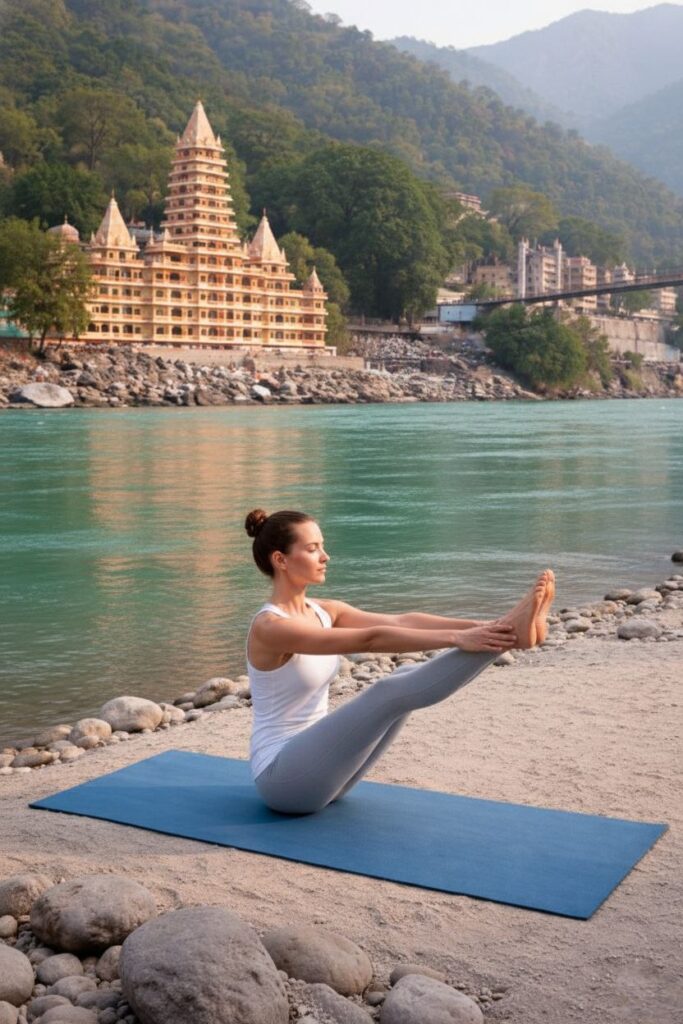
- Lie on back
- Raise arms and legs
- Make the body like a boat
- Hold 15–20 seconds
3. Kumbhakasana (Plank Pose):
Kumbhakasana is a powerful hatha yoga asana that works the entire core area simultaneously. In this asana, the body has to be kept stable in a straight line, due to which the muscles of the stomach, waist, back, and shoulders become active. Kumbhakasana not only increases core strength but also develops the stamina and stability of the body. With regular practice, posture improves, and the body feels more balanced.

- Take a push-up position
- Keep body straight
- Pull the stomach in
- Wait 20–30 seconds
4. Bhujangasana (Cobra Pose):
Bhujangasana is an important asana of Hatha Yoga, which is especially helpful in activating and strengthening the spinal muscles. In this asana, the practice stretches the front part of the body, strengthens the abdominal muscles, and improves flexibility in the spine. Bhujangasana also helps reduce back pain and tension caused by sitting for long periods. With regular exercise, the body feels more active and energetic.

- Lie on your stomach.
- Place your palms near your shoulders.
- Slowly raise your chest.
- Breathe normally.
5. Dhanurasana (Bow Pose):
Dhanurasana is an effective asana of Hatha Yoga, which is especially helpful in activating the muscles around the abdomen and waist. In this asana, both the front and back parts of the body are stretched, which improves the digestive system and helps in reducing excess belly fat. Dhanurasana, along with strengthening the spine, also increases the circulation of energy in the body. With regular exercise, the body feels more flexible and balanced.
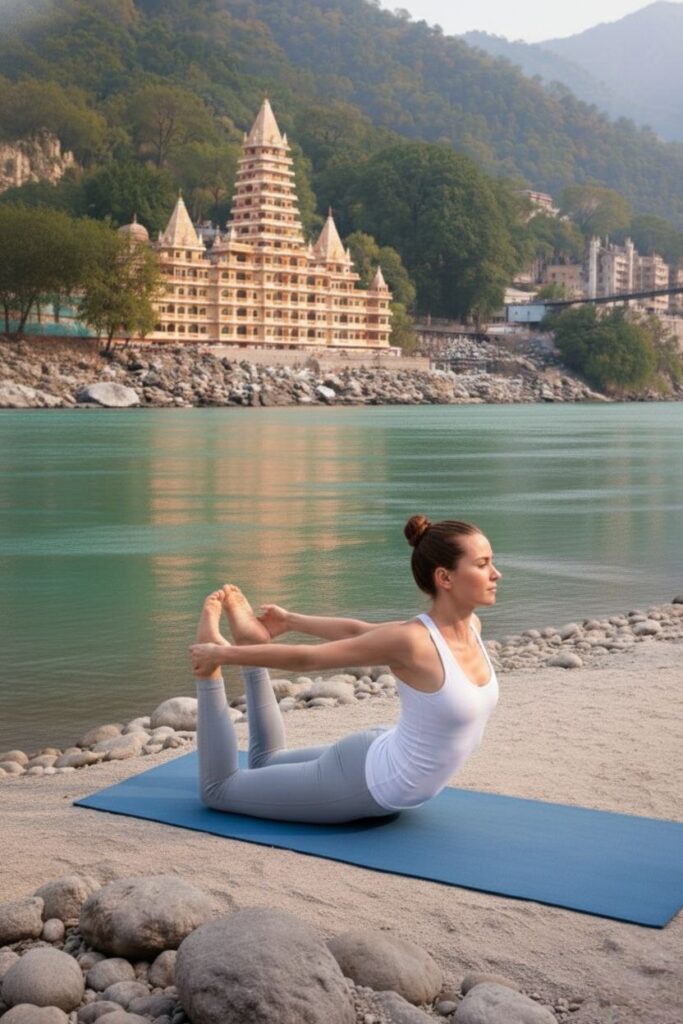
- Lie on your stomach
- Hold ankles
- Make the body like a bow
- Hold 10–15 seconds
6. Padahastasana (Forward Bend Pose):
Padahastasana is a simple yet effective asana of Hatha Yoga, which has a strong effect on the abdominal, hip, and waist muscles. Leaning forward in this asana stretches the lower part of the body, which makes the muscles strong and flexible. Padahastasana is also helpful in activating the digestive system, reducing stress, and making the body feel light. Regular exercise strengthens the core area and improves body balance.

- Stand and lean forward
- Move arms and legs
- Keep your head near your knees
7. Adhomukha Svanasana (Downward Dog Pose):
Adho Mukha Svanasana is a versatile asana of Hatha Yoga, which activates the entire body simultaneously. In this asana, the body comes in the shape of an inverted “V,” due to which the muscles of the stomach, waist, shoulders, and legs work together. This asana strengthens the core muscles as well as increases balance and flexibility in the body. Adho Mukha Svanasana also helps reduce fatigue and energize the body.

- Keep hands and feet on the ground
- Raise hips
- Press heels toward the ground
8. Setu Bandhasana (Bridge Pose):
Setu Bandhasana is an effective asana of Hatha Yoga, which especially activates the muscles of the waist, abdomen, and spine. In this asana, there is pressure on the middle part of the body, which strengthens the core muscles and provides support to the spine. Setu Bandhasana also helps reduce back pain caused by sitting for a long time.
Regular exercise brings stability to the body and improves posture.

- Lie on your back
- Bend the knees
- Raise waist
- Wait 20 seconds
Precautions while doing Hatha Yoga
As beneficial as the practice of Hatha Yoga is, it is equally important to do it with the right method and caution. Exercise done in the wrong way or in a hurry can cause harm to the body instead of benefiting it. Therefore, while doing Hatha Yoga, it is very important to understand the capacity of the body, be patient, and take care of the right time and environment. Following precautions makes yoga practice safe, effective, and beneficial in the long run.
Major precautions while doing Hatha Yoga:
- Do yoga on an empty stomach
- Increase practice gradually
- Stop if it hurts
- Pregnant women should consult a doctor
Benefits of Hatha Yoga
Hatha yoga not only provides physical strength, but it also has a positive effect on the overall health of the person. With its regular practice, the internal organs of the body become active, muscles become strong, and the mind remains calm. The effect of Hatha Yoga appears gradually, but it is long-lasting and natural, due to which the person feels a positive change in themself.
- Core strength increases
- Reduces belly and waist fat
- Mental stress decreases
- The body becomes balanced and strong
- Confidence increases
Summary
Hatha yoga is not just an exercise but a balance of body, mind, and breath. If you want to increase your core strength, relieve back pain, and develop inner strength, then Hatha Yoga is the ideal path for you.
With regular practice, correct technique, and patience, Hatha Yoga gives you a strong, stable, and healthy body.
“Practice Hatha Yoga—Awaken the power within.”
About Rishikesh Yog Kendra
Rishikesh Yoga Kendra is known for its calm, natural, and disciplined yoga environment. They provide facilities like pure, healthy vegetarian food and comfortable accommodation, with the option of both private and shared rooms. Pure and completely sattvic food is provided three times a day in Rishikesh Yog Kendra, which is suitable for yoga practice. To enrich the student experience, the institute organizes excursion trips at no extra charge. After successfully completing the course, students receive an internationally recognized certificate from Yoga Alliance USA.
Courses they provide: