Español


Viparita Karani: Legs Up the Wall Pose Benefits & Guide
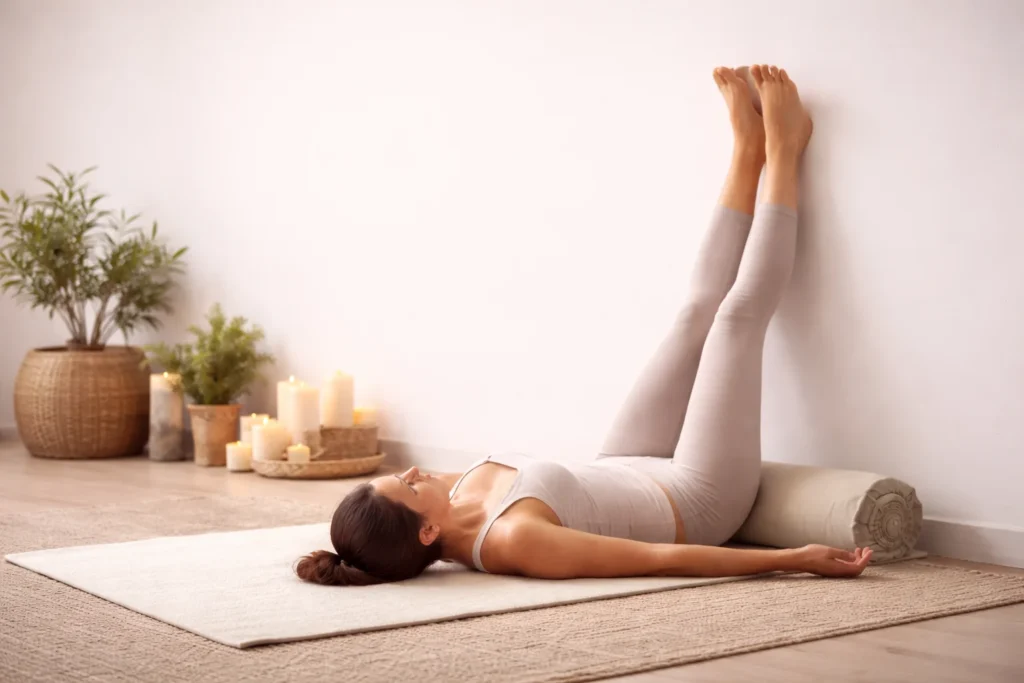
Table of Contents
- Introduction : Viparita Karani
- What is Viparita Karani ?
- Legs Up the Wall Pose: Why It Feels So Good
- How to Do Viparita Karani
- How Long Should You Do Viparita Karani?
- Viparita Karani Benefits
- What Does Putting Your Legs Up on the Wall Do?
- Can We Do Viparita Karani After Dinner?
- Can We Do Viparita Karani During the Period?
- Common Mistakes in Viparita Karani
- Precautions and Contraindications
- A Small Personal Observation
- RISHIKESH YOG KENDRA – A YOGA SCHOOL IN RISHIKESH
- Final Thoughts
- Frequently Asked Questions
Introduction : Viparita Karani
Some yoga poses look simple but reveal surprising depth once you actually practice them. Viparita Karani, or as it is more commonly called, the legs up the wall pose, is a great example. At first glance, it appears almost too easy to count as yoga. You lie down, lift your legs against a wall, and rest. That’s it.
But the first time you stay there for ten quiet minutes, something shifts. Your breath slows. The tension in your lower back releases. Your tired legs begin to feel lighter.
For many people, this posture becomes a small daily ritual — something they turn to after long hours of sitting, standing, traveling, or even just dealing with mental fatigue.
This article will show you what Viparita Karani is, how to practice it correctly, how long you should hold it, and what the real benefits of putting your legs up against a wall are. You will also learn some precautions, common mistakes, and some useful tips that make this asana more comfortable for you.
The goal is simple: help you understand why such a gentle posture has remained part of yoga practice for centuries.
What is Viparita Karani ?
Viparita Karani is a restorative yoga posture where you lie on your back while your legs extend vertically up a wall.
The name comes from Sanskrit:
- Viparita = inverted
- Karani = action or process
So the phrase loosely translates to “inverted action.”
Unlike more intense inversions like headstands or shoulder stands, Viparita Karani is passive and calming. The body rests on the floor while gravity gently encourages circulation from the legs back toward the heart.
Because of this, many yoga teachers describe it as one of the most accessible inversion poses.
Even beginners who have never practiced yoga can usually try it safely with minimal instruction.
Legs Up the Wall Pose: Why It Feels So Good
The legs up on the wall pose works mainly because it changes the relationship between gravity and circulation.
During a typical day:
- Blood naturally flows downward toward the legs and feet.
- Muscles must work to pump it back upward
- Long periods of sitting or standing slow this process
When you place your legs up on the wall, gravity helps reverse that flow.
- This simple change can:
- Reduce pressure in the legs
- Ease swelling in the feet
- Relax the nervous system
- Encourage a slower breathing rhythm
That is why many people use the pose at the end of a yoga practice, before sleep, or after a long workday.
How to Do Viparita Karani
Learning how to do Viparita Karani correctly makes the pose far more comfortable.
Step-by-Step Guide
- Sit sideways next to a wall. Your hip should touch the wall.
- Slowly lie back while swinging your legs upward.
- Extend your legs straight up the wall.
- Adjust your position in relation to the wall so that you are comfortable in the back of your legs.
- Let your arms relax at your sides with palms facing upwards.
- Close your eyes and breathe slowly.
- Relax the face, jaw, shoulders, and belly.
Many practitioners like placing a folded blanket or cushion under the hips. This creates a mild inversion and supports the lower back.
How Long Should You Do Viparita Karani?
A common question beginners ask is:
How long should you do Viparita Karani?
The answer to this is:
Beginners:
3-5 minutes
Regular practitioners:
5-15 minutes
Restorative yoga sessions:
15-20 minutes
The pose does not take a lot of muscular effort, and people tend to stay in the pose for longer after they get comfortable.
However, if you feel numbness in the legs or discomfort in the lower back, simply bend the knees and come out of the pose.
Viparita Karani Benefits
The Viparita Karani benefits come mainly from gentle inversion and deep relaxation.
Below are some of the most commonly experienced effects.
1. Improves Circulation
When your legs rise above heart level, gravity assists blood flow back toward the torso.
This can help reduce:
- Tired legs
- Heaviness in the feet
- Mild swelling after long days of standing
Athletes and runners sometimes use the pose after training for this reason.
2. Relieves Leg Fatigue
Standing all day can place constant pressure on the calves and ankles.
Practicing Viparita Karani, legs up the wall, allows those muscles to finally relax.
Even ten minutes can feel surprisingly restorative.
3. Calms the Nervous System
One of the most obvious effects of the pose is a deep mental relaxation response. When the body is secure and breathing slows down, it calms the nervous system into a parasympathetic state, also called “rest and digest.”
This is useful for:
- Relieving stress
- Creating a relaxing evening wind-down
- Preparing for meditation
4.Supports Recovery After Exercise
Because the posture encourages circulation and relaxation, many yoga teachers recommend it after intense workouts or long travel days.
It helps the body settle rather than remain in a stimulated state.
5. May Improve Sleep
Practicing legs up on the wall before bed can signal the body that it is time to wind down.
People who struggle with restless evenings sometimes find that 10 minutes in this pose helps quiet the mind.
What Does Putting Your Legs Up on the Wall Do?
You may wonder:
What does putting your legs up on the wall actually do?
The major effects are:
- Encouraging blood flow from the legs back toward the torso
- Reducing pressure from the lower limbs
- Relaxing muscles within the hips and lower back
- Activating the relaxation response within the body
It is a physical reboot after hours of gravity pressing down upon the body.
Benefits of Putting Your Legs Up on the Wall
Aside from yoga enthusiasts, the benefits of putting your legs up on the wall have become widely popular within various health communities.
Individuals use this pose for a variety of reasons:
Recovering from a long travel
Flights and road trips tend to cause stiff and swollen legs. Elevating the legs helps relieve that sensation.
Desk work recovery
Sitting for long hours can compress the hips and slow circulation. This posture helps gently counteract that pattern.
Mental reset
Because the pose encourages stillness, it often becomes a moment of quiet reflection during a busy day.
Legs Up on the Wall Benefits
The legs up on the wall benefits are subtle but consistent when practiced regularly.
People often report:
- Less leg heaviness
- More relaxation
- Better sleep at night
- A more peaceful mental state
The key is consistency. Practicing a few minutes each day tends to be more beneficial than occasional long sessions.
Can We Do Viparita Karani After Dinner?
Another question that has been raised is:
Can we practice Viparita Karani after our dinner?
Yes, we can. But there is a catch.
It is best to wait 30 to 60 minutes after eating before practicing. This allows digestion to begin normally.
Practicing immediately after a heavy meal may feel uncomfortable because the abdomen is compressed slightly when lying down.
Can We Do Viparita Karani During the Period?
Many practitioners ask whether Viparita Karani during menstruation is appropriate.
However, opinions vary slightly in different yoga disciplines.
It is advised not to practice strong inversion poses during this time.
However, Viparita Karani is a gentle pose and therefore can be done.
If you practice Viparita Karani during this time:
- Make the practice short.
- Use cushions under the hips.
- Stop if any discomfort arises.
The best practice is always to follow what the body says.
Common Mistakes in Viparita Karani
Any yoga pose can be done in an incorrect manner.
Here are a few mistakes to avoid.
Placing the hips too far from the wall
This creates tension in the hamstrings.
Holding tension in the shoulders
The upper body should remain completely relaxed.
Forcing straight legs
If the hamstrings feel tight, slightly bend the knees.
Rushing the exit
Always come out slowly to avoid dizziness.
Precautions and Contraindications
Although Viparita Karani is an easy and gentle pose, there are some who should practice it with caution.
Avoid or modify the pose if you have:
- Serious eye pressure conditions
- Glaucoma
- Uncontrolled high blood pressure
- Recent neck injuries
Pregnant practitioners should consult a qualified yoga teacher before practicing inversions.
If discomfort appears in the lower back, place a bolster or folded blanket under the hips to reduce pressure.
As with all yoga practices, comfort should guide the experience.
A Small Personal Observation
Many yoga students initially underestimate this pose.
They expect something more physically demanding to create real benefits.
But after a long workday, ten quiet minutes with your legs up the wall often feels more restorative than intense stretching.
The body finally gets a chance to pause.
That simplicity is part of what makes Viparita Karani so enduring in yoga practice.
RISHIKESH YOG KENDRA – A YOGA SCHOOL IN RISHIKESH
Located in the spiritual capital of India, Rishikesh, Rishikesh Yog Kendra is a yoga school offering authentic yoga teacher training courses with the aim of imparting in-depth and precise knowledge in yoga. RYK is offering 100 Hour YTTC, 200 Hour YTTC, 300 Hour YTTC, and along with Aerial YTTC and Yin YTTC courses in which traditional yogic philosophy and modern techniques of teaching are integrated with the fundamental subjects of yoga, such as Asana, Pranayama, Meditation, Yoga Philosophy, and Anatomy. After successful completion of these programs, students are provided with a Yoga Alliance certification and can practice yoga anywhere in the world. To ensure a complete yogic lifestyle, Rishikesh Yog Kendra provides accommodation and sattvic food with spiritual excursions in a conducive environment in which students can learn and practice yoga in a genuine manner.
Final Thoughts
Yoga does not always have to be about dynamic movements in order to have an impact.
At times, the most powerful practices are also the most basic.
Viparita Karani, or legs up against the wall, provides an opportunity for restoration in the midst of all our busyness.
It provides an opportunity for our circulatory system, our muscles, and our minds to slow down. That may be exactly what many people need at the end of a long day.
Frequently Asked Questions
Q.Is Viparita Karani good for beginners?
Ans.Yes. The pose is easy, supported, and accessible even to beginners.
Q.How often should you practice Viparita Karani?
Ans.Many people practice it daily for 5–10 minutes, especially in the evening.
Q.Can Viparita Karani help to reduce stress?
Ans.Yes, the pose encourages slow breathing and relaxation, which may calm the nervous system.
Q.Is the legs-up-the-wall pose the same as Viparita Karani?
Ans.In modern yoga practice, the legs up the wall pose is commonly used as the practical version of Viparita Karani.
Q.Can you do Viparita Karani every day?
Ans. Yes Since it is a restorative pose, it can be practiced every day.
Q.Should the Hips Touch the Wall?
Ans.Not necessarily. It is more comfortable to leave a small space between the hips and the wall.
Q.Are Beginners Able to Hold This Pose for 15 Minutes?
Ans.Yes, provided that the body feels comfortable and supported.