Español


Yin yoga: A gentle path to flexibility and peace
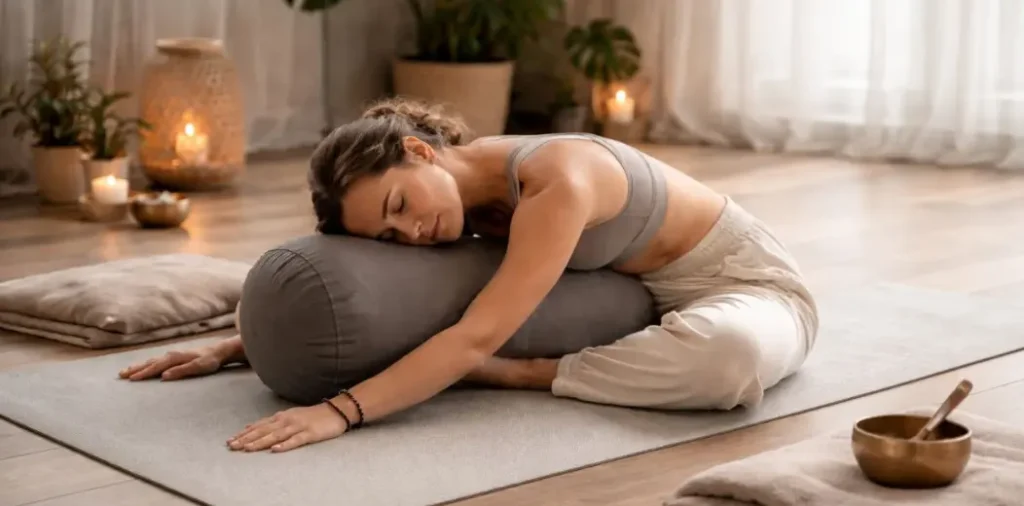
Table of Contents
- Introduction to Yin Yoga
- What is Yin Yoga?
- How to Perform Yin Yoga
- 1. How to prepare the right space and mindset
- 2. Don’t warm up (or go too light)
- 3. The right way to come into the pose
- 4. Poses can be held for longer periods of time
- 5. Focus on Breath
- 6. Difference between discomfort and pain
- 7. How to use props
- 8. The right way to spring from the pose
- 9. Can you accept silence and stillness?
- 10. Rest after practice (Savasana)
- How Yin Yoga Works on the Body and Mind
- Top Benefits of Yin Yoga
- Improve Flexibility and Joint Mobility
- Reduces stress and anxiety
- Calms the nervous system
- Enhances Mindfulness and Inner Awareness
- Supports Better Sleep and Deep Relaxation
- Promotes Emotional Balance
- Who Should Practice Yin Yoga?
- Best Time to Practice Yin Yoga
- Precautions and Safety Tips for Yin Yoga
- Why Yin Yoga Is Ideal for a Busy Modern Lifestyle
- Conclusion: Finding Flexibility and Peace Through Yin Yoga
- About Rishikesh Yog Kendra
Introduction to Yin Yoga
In today’s fast-paced and stressful lifestyle, we live with more time tension, deadlines, and mental pressure. Its effects are visible not only on the mind but also on the body, such as stiffness, fatigue, poor sleep, and emotional imbalance. In such times, Yin Yoga is a gentle practice that teaches us to slow down, breathe, and connect with ourselves.
Yin yoga isn’t just about stretching; it’s really more like taking a mental break. Holding these poses for a long time, your body eventually settles; it just relaxes. Everything gets really quiet then. People who do a lot of fast yoga, the active kind, find that this balances them out. It’s perfect if you just want to find some peace in your life, you know, just some stillness. It helps the mind slow way down.
What is Yin Yoga?
Yin yoga is that really slow kind of yoga where you just hold the poses. I mean, you hold them for a long time, like maybe two minutes or sometimes five minutes, maybe even longer, just sitting there. You don’t actually use your muscles; you relax them totally. The whole idea is to get down into the really deep parts, the connective tissues inside your body.
Yin Yoga apparently started with Taoist philosophy and older Chinese medicine ideas. They always talk about how we have these energy lines, or meridians, inside us, and you really need to keep them balanced if you want to feel healthy. So the poses in Yin Yoga are meant to hit those spots and get that energy moving smoothly again. It’s supposed to help balance your mind and body.
This type of yoga is all about just being still, you know, really paying attention. We need that now because everything is just so distracting and loud all the time.
How to Perform Yin Yoga
1. How to prepare the right space and mindset
Before starting Yin Yoga, choose a calm and quiet place. Put your phone on silent and keep distractions at bay. Wear comfortable clothes that keep the body relaxed. In Yin Yoga, speed is not important; stillness is important.
2. Don’t warm up (or go too light)
There is no need for a heavy warm-up in Yin Yoga. It is important to keep the body slightly cool so that the deep connective tissues can be affected. If you want to do just light joint movement or deep breathing, you can do it.
3. The right way to come into the pose
Enter each pose slowly. When the body becomes comfortable, stop the tab movement. Try to relax the muscles and let gravity do its work. Do not force the pose at all.
4. Poses can be held for longer periods of time
In Yin Yoga, poses are held for 2 to 5 minutes (sometimes up to 7 minutes). Beginners can start from 1 to 2 minutes. With time, the body starts softening naturally.
5. Focus on Breath
Deep and slow breathing is the core of Yin Yoga. Take deep breaths from your nose and breathe slowly. If the mind wanders, gently bring it back to the breath.
6. Difference between discomfort and pain
Mild discomfort is normal in Yin Yoga, but sharp pain, joint pain, or numbness is not normal. If you feel like this, then immediately adjust your pose, or spring will come.
7. How to use props
Blocks, bolsters, cushions, and folded blankets are important parts of Yin Yoga. Use of props is not a weakness but a smart practice. These provide support to the body and prevent injury.
8. The right way to spring from the pose
Make slow movements even while coming out of the pose. Avoid sudden lifting or stretching. After each pose, relax for a while in a neutral position.
9. Can you accept silence and stillness?
Silence is important in Yin Yoga. It is normal to have thoughts at this time—just observe them without judging. This practice becomes like meditation.
10. Rest after practice (Savasana)
At the end of the Yin Yoga session, do Savasana for 5–10 minutes. This gives the body and mind time to absorb the effects of the practice.
Rishikesh Yog Kendra offers a well-structured Yin Yoga Teacher Training Course guided by experienced yoga masters, blending ancient wisdom with modern understanding. The course focuses on both practice and theory, helping students build confidence and depth in their teaching.
How Yin Yoga Works on the Body and Mind
Yin yoga isn’t really focused on your big surface muscles. It tries to get down into the deeper parts of your body, like the joints and that connective tissue, the fascia. When you hang out in a pose for a long time, gravity and your own weight just gently pull on those deep tissues, stretching them out slowly.
Along with this, when we reduce movement and focus on breath, the nervous system slowly starts to relax. Heart rate slows down, blood pressure becomes balanced, and the body goes into healing mode.
Mentally, Yin Yoga teaches us to stay with discomfort without reacting. This skill also helps in daily life—whether it’s stress, emotions, or challenges.
Top Benefits of Yin Yoga
Improve Flexibility and Joint Mobility
Yin yoga is great because you get super flexible. Holding those poses for a long time really loosens up your joints, so you feel less stiff and can move better. It is considered especially beneficial for the hips, lower back, spine, and knees.
Reduces stress and anxiety
Yin yoga naturally calms the body’s stress response. Deep breathing and slow practice reduce stress hormones like cortisol, which gradually reduces anxiety and mental restlessness.
Calms the nervous system
Yin yoga activates the parasympathetic nervous system, which is responsible for rest and recovery. This brings the body out of fight-or-flight mode and experiences deep relaxation.
Enhances Mindfulness and Inner Awareness
If you hold still for just a couple of minutes, your brain immediately wants to start moving again, which is normal. The whole point is learning to watch your breathing and whatever you’re thinking or feeling without actually judging it, which is basically what mindfulness is all about.
Supports Better Sleep and Deep Relaxation
Yin yoga really works if you can’t sleep right. It’s a natural fix that quiets your brain down so you can actually cycle into deep, deep rest.
Promotes Emotional Balance
Sometimes emotions come to the surface during Yin Yoga practice. This process helps in emotional release and healing. Regular practice develops emotional stability and inner peace.
Who Should Practice Yin Yoga?
Yin Yoga is pretty good for almost anyone, truthfully. If you are new to yoga, it’s a very safe way to start out, not too crazy. People who work hard and students dealing with stress find it really helps them calm down mentally, which is important. Even super active people or athletes use it, mostly just to recover and get more flexible. It is also gentle enough for older folks, as long as they have someone guiding them a little bit.
Best Time to Practice Yin Yoga
When should you do Yin Yoga? Most people say later in the day, like evening or even at night. That’s usually when your body starts to settle down on its own anyway. Doing it then just helps get rid of all the stress you picked up during the day and really makes it easier to fall asleep. It just feels right. Morning practice can also be done, especially if you want a meditative and calm start. You should generally try to practice when your stomach is empty or maybe after just a small snack.
Precautions and Safety Tips for Yin Yoga
With Yin Yoga, you really have to learn the difference between being uncomfortable and actually hurting yourself. Discomfort is fine; that’s kind of the point, but if it’s sharp pain or pressure deep in your joints, you need to adjust immediately or just stop. Also, if you’re pregnant, have just had surgery, or have any long-term joint problems, make sure you talk to a certified teacher first. Supporting the body by using props such as bolsters, blocks, and cushions is an important part of Yin Yoga.
Why Yin Yoga Is Ideal for a Busy Modern Lifestyle
Today, we spend too much time sitting in front of screens, which stiffens the body and overloads the mind. Yin yoga is great because it makes you actually slow down, which is what everybody needs for their brain and their body. You don’t have to be strong or have tons of energy for it, which is nice. But it still gives you this deep healing feeling and makes things feel balanced. It’s exactly what you need when life is moving too fast.
Conclusion: Finding Flexibility and Peace Through Yin Yoga
Yin yoga is pretty gentle, but it really works, you know? It’s supposed to quiet down your brain while making your body more flexible. Doing this kind of yoga actually helps you learn to be more patient and just accept things as they are. If you’re trying to handle stress better or just feel more balanced emotionally and maybe find a peaceful way to live, then Yin Yoga is probably a good thing to try out. Keep doing it regularly, and you start to feel this really strong connection between what your body is doing and what your mind is thinking.
About Rishikesh Yog Kendra
Rishikesh Yoga Kendra is considered a traditional and authentic yoga institute situated in the blessed and peaceful setting of Rishikesh. At Rishikesh Yoga Kendra, we teach more than physical exercises; we teach the complete path of yoga as the discipline and practice of yoga in everyday life by developing the mind to become aware of its own activity through self-discipline and self-awareness, thereby giving rise to alertness and awareness. They provide facilities like food and comfortable accommodation, rooms with private and shared options, and pure sattvik meals three times a day. After completing the course, you will receive a certificate recognized by Yoga Alliance USA. Courses Offered: