Español


Is Rishikesh Safe for Solo Female Travellers? What to Actually Expect
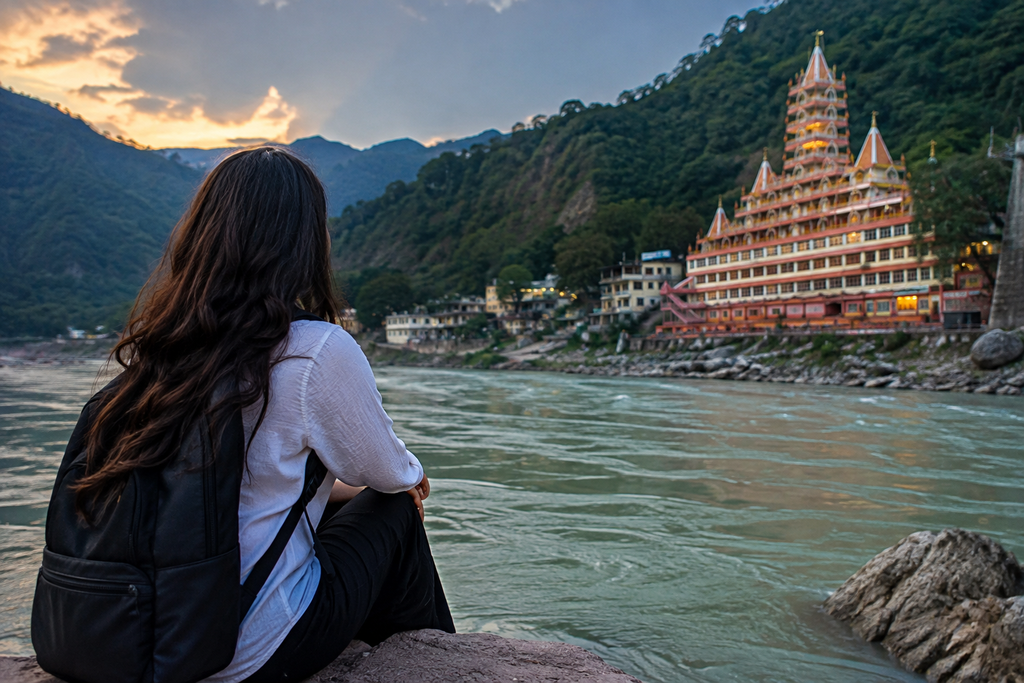
Table of Contents
- Introduction :
- Is Rishikesh Safe for Solo Female Travellers?
- Why Rishikesh Feels Different From the Rest of India
- Where You Stay in Rishikesh Matters Most
- Upper Tapovan
- The Laxman Jhula Area
- Ram Jhula and Swarg Ashram
- Rishikesh Town
- Arriving in Rishikesh Safely
- What Evenings in Rishikesh Are Like
- What to Wear in Rishikesh
- Things Nobody Warns You About
- Staring
- Monkeys
- Touts and Hawkers
- The River
- Stray Dogs and Traffic
- Practical Things to Sort Out Early
- Questions to Ask a Yoga School Before You Book
- About Rishikesh Yog Kendra
- Final Thoughts
- Frequently Asked Questions
Summary
Is Rishikesh Safe for Solo Female Travellers: Yes, and with sensible planning. Rishikesh is a dry, vegetarian pilgrimage city where the area you stay in, the time you travel and the school you choose matter far more than luck.
Whether you are joining a 200 Hour YTTC in Rishikesh, a short retreat or an Aerial Yoga Teacher Training in Rishikesh, this guide covers neighbourhoods, arrival, evenings, clothing and the questions worth asking a yoga school before you pay a deposit.
Introduction :
Every week we receive a version of the same message. Someone has found our teacher training, read the schedule, and wants to come. Then there is a pause, and the real question arrives: I would be travelling on my own. Is it safe?
The honest answer is that Rishikesh is one of the gentler places in India for a woman travelling alone, and that “safe” is still the wrong word to reach for. Safety is not a yes or no. It depends on where you stay, how you arrive, what time you are out, and how much you have thought about it in advance.
So here is what we actually tell people, including the parts that are not flattering.
Is Rishikesh Safe for Solo Female Travellers?
For most women, yes. Thousands of solo female travellers come to Rishikesh every year to study yoga, and the overwhelming majority leave without incident. What makes the difference is preparation rather than courage.
Two things about this city change the atmosphere more than anything else, and most safety guides skip straight past them.
Why Rishikesh Feels Different From the Rest of India
Alcohol is illegal in Rishikesh. Not frowned upon, not difficult to find, but not sold at all. Rishikesh is a holy city and the ban is a legal one. Meat is prohibited for the same reason. Whatever you think of that as a policy, the practical effect for a woman walking home at nine in the evening is significant. There are no bars, no drinking crowds, and no groups of drunk men outside a pub at closing time. That entire category of risk, the one most women are quietly worried about, is largely absent.
The second thing is that most visitors here are pilgrims rather than tourists. They have come to bathe in the Ganga, visit temples and sit through the evening aarti. The mood is closer to a cathedral town than a party town.
None of this makes Rishikesh magic. It changes the texture of the place, and the texture matters.
Where You Stay in Rishikesh Matters Most
Rishikesh is not one place. It is four or five, and they feel completely different from one another.
Upper Tapovan
Where our school sits, above the river on the quieter side. It is residential and full of yoga schools, small cafés and long-stay students. Evenings are calm and you will recognise faces within a week.
The Laxman Jhula Area
Busier. Shops, guesthouses, day trippers, more noise and more hustle. Perfectly fine in daylight, and considerably less pleasant alone after dark.
Ram Jhula and Swarg Ashram
Home to the large ashrams and the evening Ganga aarti. Crowded during the day and very much worth seeing. It empties out quickly once the aarti finishes.
Rishikesh Town
Down near the railway station and Triveni Ghat, this is an ordinary north Indian town. Traffic, markets, very few foreigners. There is nothing sinister about it, but it is not set up for you.
If you are choosing between schools, ask exactly where the campus sits and whether you can walk to it. Staying somewhere quiet and uphill, within a few minutes of where you are studying, removes most of the situations you would rather avoid. You can see where we are and how our accommodation is arranged before you commit to anything.
Arriving in Rishikesh Safely
The riskiest moment of the whole trip is usually the first six hours, and it is also the most avoidable.
- Dehradun’s Jolly Grant airport is roughly an hour away by road and is the easiest way in.
- From Delhi it is six to seven hours by car, or an overnight train to Haridwar followed by a forty-five minute taxi.
- Do not arrive after dark at a station with no idea who is collecting you, negotiating with drivers while jet-lagged and holding all your luggage.
Arrange your transfer before you fly. Any school worth studying with will organise this and should send you the driver’s name and number in advance. For students joining our 200 Hour Yoga Teacher Training in Rishikesh, pickup is booked before you land and included in the fee. If a school is vague about this, it tells you something about how they will handle everything else.
What Evenings in Rishikesh Are Like
Rishikesh goes to bed early. Most cafés close around nine or ten, and by eleven the streets are genuinely empty.
Main roads are reasonably lit. Side lanes are not, and there are stray dogs that are relaxed during the day and territorial at night. Walking back alone at eleven is not advisable, less because of any specific threat than because there is nobody around, the surface is uneven and you cannot see much.
In practice this rarely comes up, because there is not a great deal to stay out for. Our own students are back on campus by 9:30pm. We have a curfew, and we know some people find it strict. It exists because a group of people who all get home at a sensible hour is a group that looks out for one another, and because a 5:30am start is unforgiving.
What to Wear in Rishikesh
This is not about modesty as a moral question. It is about how much attention you attract and how much you would rather not.
- Loose clothing, with shoulders and knees covered.
- Leggings with a long top or kurta are completely normal, and what most of our students end up living in.
- A light scarf is genuinely useful, for temples, for sun and for the bus.
- Do not swim at the river in a bikini. Indian women bathe fully clothed and this is a pilgrimage site. Nobody will shout at you, but you will feel it.
You will see travellers ignoring all of this. You will also notice that they get stared at more.
Things Nobody Warns You About
Staring
This is what our students mention most, and it surprises people because it is not dangerous, just relentless. Men will look at you, sometimes for an uncomfortably long time, and occasionally someone will try to take a photograph. It is rarely a prelude to anything. It is mostly curiosity, and it wears you down anyway. Sunglasses help more than you would expect, and so does walking as though you know exactly where you are going.
Monkeys
Genuinely the most likely thing to actually take something from you. They are bold, they are quick, and they associate plastic bags with food. Do not eat while walking, do not leave a window open, do not make eye contact, and do not try to get your snack back.
Touts and Hawkers
Around the bridges and the ghats you will be offered rafting, taxis, astrology and hash. A firm no and continued walking works. Do not stop to explain yourself.
The River
This is the one that actually kills people, and it is left out of almost every safety article. The Ganga here is fast, cold and deeper than it looks. Drownings happen every year, including among strong swimmers. Enter only where local people are bathing, hold the chains, and do not go past your knees.
Stray Dogs and Traffic
Stray dogs are calm by day and bolder after dark, so avoid unlit lanes late at night. There are no pavements, scooters are everywhere and right of way is theoretical. Cross with a group where you can.
Practical Things to Sort Out Early
- Get an Indian SIM card at the airport. You will need your passport and a photograph, and it takes about twenty minutes.
- Carry cash. Plenty of small places do not take cards and ATMs occasionally run dry.
- Drink filtered or bottled water only, including for brushing your teeth in the first week.
- Pharmacies are everywhere and well stocked, and there is a hospital in town.
- Your accommodation will need your passport for registration. That is routine for foreign nationals, not a red flag.
Questions to Ask a Yoga School Before You Book
If you take nothing else from this article, take these. They separate schools quickly.
- Is there a curfew, and what time is it?
- Do you arrange airport pickup, and is it included in the fee?
- Is there staff on site overnight?
- Can I request a female roommate, or a private room?
- Can I speak to a woman who studied with you recently?
A school that answers all five without hesitating has thought about this before. A school that becomes defensive about the fifth one has told you what you need to know.
About Rishikesh Yog Kendra
Rishikesh Yog Kendra is located in Upper Tapovan, in the spiritual city of Rishikesh; furthermore, it is a traditional yoga school offering teacher training, retreats and holistic healing programmes. Additionally, nestled in the foothills of the Himalayas and alongside the holy river Ganga, the school offers a safe and supportive space for study, healing and inner transformation, with airport pickup arranged for every student and staff on site throughout the course.
Courses Offered
A Beginner’s Yoga Course to Improve Your Understanding of Practice
200 Hours Yoga Teacher Training in Rishikesh
A program accredited by Yoga Alliance to get students truly ready for the profession of teaching yoga.
300 Hours Yoga Teacher Training in Rishikesh
Advanced Training For Certified Teachers
50 Hours Aerial Yoga Teacher Training in Rishikesh
A seven-day hammock-based training open to complete beginners, also available as a module within the 200 hour course.
Prenatal & Postnatal Yoga Teacher Training Rishikesh
Thorough yoga training with emphasis on safe practices for supporting pregnancy and postpartum health.
Sound Healing Teacher Training in Rishikesh
Discover the healing qualities behind sound, meditation, singing bowls, and vibrational therapy methods.
Final Thoughts
Most of the women who train with us arrive nervous and leave wondering what they were worried about. That is the usual pattern and it is worth saying plainly. But that outcome is not luck. It comes from arriving in daylight with a driver waiting, staying somewhere quiet, dressing in a way that does not invite attention, being home before the streets empty, and having people around who notice if you do not turn up to breakfast.
Rishikesh will not look after you automatically. Set it up properly and it is one of the calmest and most welcoming places you could choose for a first solo trip to India. If you are weighing it up and want to ask something specific, message us directly. You will get a person, and we would far rather answer an awkward question now than have you worrying on the flight.
Frequently Asked Questions
1. Is Rishikesh safe for solo female travellers?
Yes, for most women. Rishikesh is a dry, vegetarian pilgrimage city with no bar culture, which removes a common source of risk. Staying in a quiet area, arranging your arrival transfer in advance and being home before the streets empty matters more than anything else.
2. What should a woman wear in Rishikesh?
Loose clothing covering the shoulders and knees. Leggings with a long top or kurta are normal and comfortable. A light scarf is useful for temples and sun. Avoid swimwear at the river, as this is a pilgrimage site.
3. Is it safe to walk alone at night in Rishikesh?
Main roads are reasonably lit and the town is quiet by ten. Unlit side lanes are best avoided late at night, mainly because of poor lighting, uneven surfaces and stray dogs rather than any specific threat.
4. Which area of Rishikesh is safest to stay in?
Upper Tapovan is quiet, residential and full of yoga schools, which makes it the easiest area for a solo traveller. Laxman Jhula is busier and Rishikesh town is less oriented toward visitors.
5. Is alcohol available in Rishikesh?
No. Rishikesh is a holy city where the sale of alcohol and meat is prohibited by law. This is one of the reasons the town feels calmer after dark than most Indian cities of its size.
6. Can I swim in the Ganga at Rishikesh?
Only where local people are bathing, and not beyond knee depth. The current is fast and the water is cold, and drownings occur every year including among confident swimmers.